
Technical Proficiency + AI Business Strategy: The Online Master of Science in Business Analytics
The future of business is being directed by data science, analytics and artificial intelligence. William & Mary’s Raymond A. Mason School of Business delivers an Online Master of Science in Business Analytics (MSBA) program that equips ambitious professionals with the deep technical expertise and strategic business knowledge needed in our data-driven world. With courses dedicated to machine learning and artificial intelligence, you’ll also master the skills leaders need in a business world that’s been disrupted and accelerated by AI. As a “Public Ivy” institution, William & Mary combines academic precision with industry-relevant application, preparing you to transform complex data into strategic insights that drive business success.
When you enroll in our accelerated program, you’ll complete the Foundations in Business Analytics Certificate within just five months at no additional time or cost. This valuable credential immediately enhances your resume while you continue toward earning your full Master’s in Business Analytics online in as few as 16 months—a qualification that commands respect and opens doors to advanced career opportunities.
Online MSBA at a Glance
- Complete in 16-18 months
- 100% online format
- 32 credits
- 8 core courses
- 2 prerequisite courses
- No GMAT or GRE scores required
Why Choose William & Mary’s Online Master’s in Business Analytics?
William & Mary’s Online MSBA program delivers exceptional career impact through a unique combination of technical acumen, AI mastery and strategic business application. Our alumni experience remarkable career growth:1
As Bloomberg’s #2 Business School for Learning,2 our Online MSBA places you among the elite. The program’s blend of technical depth and strategic focus ensures you’ll graduate with analytical capabilities and leadership skills employers demand.
Master Advanced Analytics Skills That Employers Demand
The William & Mary Online MSBA program gives you an unmatched competitive advantage by developing expertise that spans technical proficiency and business leadership. Position yourself for success in high-growth analytics roles across industries with skills that rank among U.S. News & World Report’s Best Business Jobs list.
Our curriculum is designed to maximize your computing and modeling proficiency while honing your ability to apply data science to strategic business planning. You’ll master industry-standard tools and techniques, including:
- Python and R programming for business applications
- Machine learning and artificial intelligence implementation
- Supervised and unsupervised learning
- Deep learning and natural language processing
- Data visualization and dashboard creation
- SQL and advanced database management
- Cloud computing and big data technologies
- Optimization and prescriptive analytics
Prepare for high-growth analytics roles, including:
- Operations Research Analysts: 21% growth3
- Market Research Analysts: 7% growth4 and #6 in Best Business Jobs5
- Management Analysts: 9% growth6 and #2 for Best Business Jobs5
The Online Master of Science in Business Analytics program goes beyond theoretical knowledge, teaching you to integrate analytics and AI into business processes, visually convey insights from complex data and champion the importance of data-driven decision-making at any organization.
A Curriculum Built for Data and Strategy Leaders
The Online MSBA program from William & Mary blends technical acumen with strategic business knowledge and AI mastery through a carefully crafted curriculum. Developed in consultation with employers, graduates and our Business Analytics Advisory Board, our program ensures you graduate with a tangible advantage in this high-demand field.
Our 32-credit curriculum consists of:
- 2 prerequisite courses (8 credits)
- 1 optional pre-program course worth 0 credits
- 8 core courses (32 credits)
Prerequisite Courses (8 credits)*
BUAD 512A: Probability and Statistics with R (4 credits)
BUAD 512B: Business Modeling with Python (4 credits)
Core MSBA Courses (32 credits)
BUAD 5112 Competing Through Business Analytics (4 credits)
BUAD 5772 Database and Data Warehouses for Business Intelligence (4 credits)
BUAD 5052 Decision Modeling (4 credits)
BUAD 5092: Optimization and Prescriptive Analytics (4 credits)
BUAD 5122: Machine Learning and Predictive Analytics (4 credits)
BUAD 5132: Big Data and Cloud Computing Technologies (4 credits)
BUAD 5802: Artificial Intelligence Applications for Business (4 credits)
BUAD 5762 Business Analytics Capstone Project (4 credits)
*Note: BUAD 512A and 512B are prerequisites for the remainder of the program. Students may be able to satisfy these prerequisites with courses from other sources, and they should inquire about their eligibility during the admission and onboarding process if they wish to do so.
Master’s in Business Analytics Online Capstone Project
The capstone project is the culmination of your Online MS in Business Analytics experience, where you’ll work in small teams to solve real business challenges for actual organizations. These projects integrate the skills you’ve developed throughout the program:
- Defining and framing complex business problems
- Developing systematic approaches using analytics
- Applying appropriate methodologies and quickly prototyping solutions
- Generating innovative solutions and communicating them persuasively
Through this hands-on experience, you’ll demonstrate your ability to transform data into actionable insights that drive organizational success. Recent capstone projects have included machine learning implementations for healthcare providers, customer segmentation analyses for retailers and predictive models for financial institutions.

Video Transcript
They explain and they predict. In business analytics, we want to prescribe. So we have a problem. Not only we want to understand the problem, the typical descriptive analytics, but also I want to understand why it happened, right? Diagnostic analytics. Then I want to understand what’s gonna happen, predictive analytics, and move beyond and prescribe a solution for that. So if I do business and I analyze a problem in business, it’s because it is a problem and because I want a solution, which in science, not necessarily. I just want to understand the stars or the movement of the universe, right? In this case, no, I want a solution. So prescriptive analytics is a lot more into a particular applied context. And that would be for business analytics. We do everything we analyze is business situations, business problems, business data that makes sense to a decision maker in an organization. The rest of it is data science is the basis for what we do, but it’s not all we do. You have to understand the context too. So it’s not so much the tool, but it’s the impact that we analyze.
Data Science and Business Analytics
What separates data science from true business impact? In this thought-provoking video, Dr. Guillermo Rodriguez-Abitia breaks down a critical distinction that many professionals overlook: the difference between simply understanding data and using it to drive decisions.
Explore how business analytics goes beyond explanation and prediction to deliver actionable solutions, empowering organizations to solve real-world challenges. For anyone looking to elevate their strategic thinking and make data-driven decisions that matter, this is a perspective worth watching.

Shaping AI Business Analytics Education
The strength of the Mason School of Business's leadership in AI lies in its faculty—scholars and practitioners who are actively shaping how artificial intelligence is understood and applied in business today. Rather than focusing solely on technical development, they equip leaders to think critically about AI’s role in strategy, decision-making, and organizational impact.
Advancing Ethical and Human-Centered AI
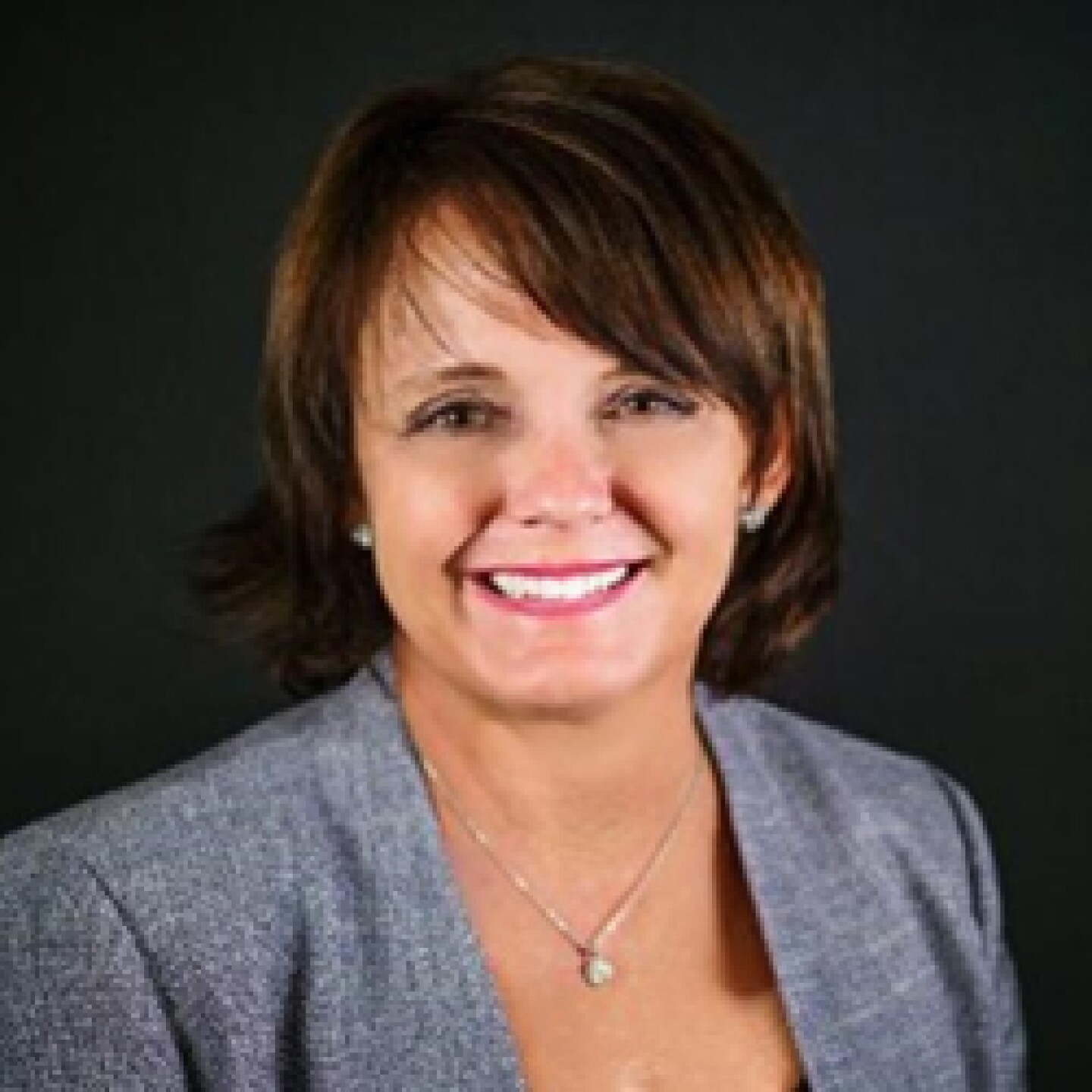
Monica Tremblay, Ph.D., Hays T. Watkins Distinguished Professor of Business, brings a complementary focus on the human and ethical dimensions of AI. A leading voice in responsible AI and organizational transformation, her work explores how technology intersects with human judgment, culture, and trust.
Her research, including efforts to improve predictive models in high-stakes sectors like the juvenile justice system, reflects a core belief: AI must be grounded in ethical responsibility and human expertise. As she notes, AI is not a standalone discipline, but a tool that enhances every aspect of business education.
In the classroom, Professor Tremblay is equally committed to accessibility. Her machine learning courses are intentionally designed to remove technical barriers, ensuring that students from all backgrounds can engage with AI concepts and contribute to data-driven problem-solving.
Video Transcript
Then I did apply for a Fulbright scholarship, and I was lucky enough to get it, and I came to the States to do my PhD and an MBA. So my PhD was in business administration with a major in Information Systems. And the rest is history. It evolved, right? So from information systems to business analytics, it's all about aiding decision-making and making business intelligence more effective. I started with technology transfer, that was my original interest. And then it evolved to many things that have to do with cross-cultural issues of information technology management, innovation and digital transformation. So I did... My latest research is based on that. Particularly, digital transformation is the one that I like the most. As a part of what we were saying, data in every part of the organization is how organizations have to be transformed in order to leverage technology, and take advantage of technology trends, and be resilient, and be adaptable and be competitive.
Meet the Online MSBA Faculty Director
What’s the difference between analyzing data and actually driving decisions? In this Meet the Faculty feature, Dr. Guillermo Rodriguez-Abitia challenges conventional thinking—revealing how business analytics goes beyond explaining and predicting to deliver real solutions.
Gain insight into how data, context, and decision-making come together to solve meaningful business problems, and why impact, not just tools, defines true analytics.
MSBA Online Program Career Growth
The Online Master of Science in Business Analytics program delivers exceptional career outcomes, with graduates launching successful careers across diverse industries and roles:
With the skills you’ll develop in our Master’s in Business Analytics program, you’ll be qualified for high-demand roles including data scientist, analytics manager, business intelligence developer, data engineer and machine learning engineer.
Foundations in Business Analytics Certificate
The Online Foundations in Business Analytics Certificate provides a strategic entry point to your analytics journey. Complete just three courses in five months to gain essential business analytics tools and skills that can immediately launch you into analytics-driven roles.
When enrolled in the William & Mary Online MSBA program, you’ll earn this certificate automatically within your first five months of study at no additional time or cost. This valuable credential enhances your resume and LinkedIn profile while you continue toward your full degree, giving you immediate leverage in the job market.
The certificate consists of:
- 12 credits
- 3 courses
- 2 programming languages
- 100% online format
All credits earned in the certificate program seamlessly apply toward the full online business analytics master’s if you choose to continue your education.
Join a Diverse, Dynamic Learning Community at William & Mary
The William & Mary Online MSBA program brings together professionals from diverse backgrounds, creating a rich learning environment where you’ll gain insights not only from our expert faculty but also from peers with varied perspectives and experiences.
Take a look at the story told by our cohort demographics, and consider what you could learn not only from our Master of Science in Business Analytics program curriculum and faculty, but also from a diverse cohort of peers:1
This diversity creates invaluable networking opportunities and collaborative learning experiences that extend beyond the classroom. You’ll build connections with fellow analytics professionals while gaining exposure to different industry applications and approaches to data challenges.
More Than a Degree.
This Is Your Launchpad.
A William & Mary education is not just a degree but a unique connection to a tight-knit community of students, alumni, bold educators and driven, principled, connected leaders. Build your brand with a university known for breaking barriers, championing integrity and channeling academic grit since its inception.
The Raymond A. Mason School of Business imparts essential business knowledge and builds the dynamic mindset necessary to lead in today’s challenging and rapidly changing business environment. As an online graduate business student, you will:
✓ Graduate with the perspective to envision and enact positive
change
✓ Access mentorship and experiential learning opportunities
✓ Receive personalized career support
✓ Build a lasting network to bolster your career for years to
come
This will only take a moment.
More Information
Interested in Our Online Programs?
- Based on a limited sample of self-reported data from alumni of William & Mary’s Online MSBA program from graduating cohorts between 2021 and 2025
- Retrieved on September 25, 2026, from bloomberg.com/business-schools/william-and-mary-mason
- Retrieved on July 1, 2026, from bls.gov/ooh/math/operations-research-analysts.htm
- Retrieved on July 1, 2026, from bls.gov/ooh/business-and-financial/market-research-analysts.htm
- Retrieved on July 1, 2026, from money.usnews.com/careers/best-jobs/rankings/best-business-jobs
- Retrieved on July 1, 2026, from bls.gov/ooh/business-and-financial/management-analysts.htm